How to Remove a Plastic Model Kit From the Sprues (Beginner‑Friendly Guide)
If you’re new to model building, one of the first skills you’ll learn is removing parts from the sprues—the plastic frame that holds every piece of your kit. Do it right, and your build will look crisp and professional. Do it wrong, and you’ll end up with stress marks, gouges, or warped parts.
Below is a simple, step‑by‑step guide to help you start strong.
Disclosure: The following blog contains Amazon Associate links. Using these links to make a purchase costs you nothing, but I may earn a small commission as an Amazon Associate.
🧰 Tools You’ll Need
Sprue cutters – Flush‑cutting nippers designed for plastic.
Hobby knife – For trimming leftover nubs.
Fine sanding sticks or files – To smooth the surface after trimming.
Tweezers – Helpful for tiny parts.
Cutting mat – Protects your table and keeps cuts clean.
Optional: plastic cement – Only for assembly, not removal, but good to have ready.
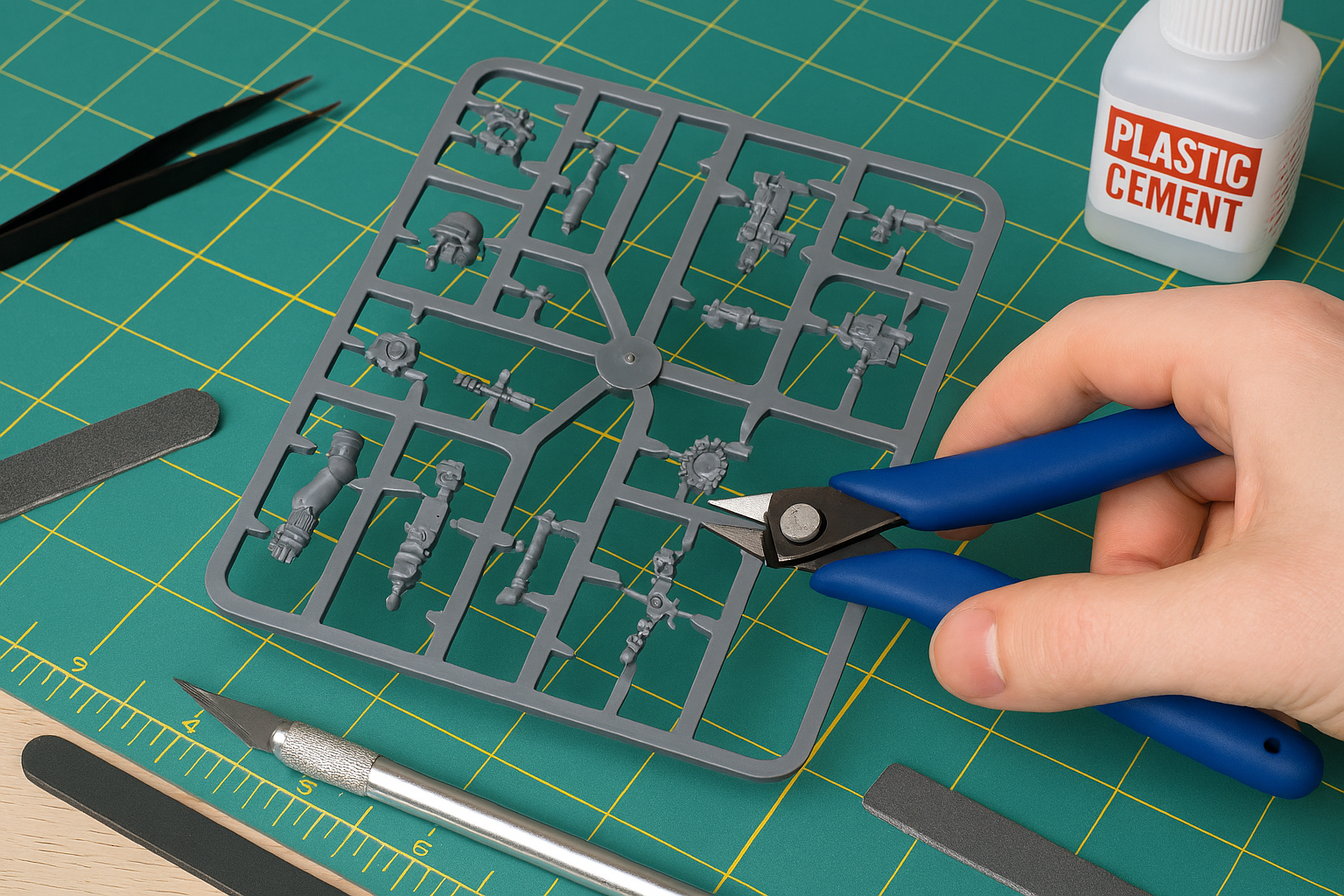
✂️ Step‑by‑Step: How to Remove Parts Cleanly
1. Identify the part on the sprue
Check the part number on the instruction sheet and match it to the sprue map.
2. Make your first cut away from the part
Cut the gate a few millimetres out from the part instead of cutting flush immediately. This prevents stress marks and cracking.
3. Trim the nub down carefully
Use your hobby knife to shave the remaining nub slowly and gently. Always cut away from your fingers.
4. Sand the surface smooth
Use a fine sanding stick (800–2000 grit) to smooth the area until it blends with the part. Work lightly—plastic removes faster than you think.
5. Inspect the part
Check for scratches or stress marks and give it a final polish if needed.
🎨 Prep Tips Before Painting
Good prep makes painting easier and helps your colours look smooth and vibrant.
Wash the parts – Use warm water and a drop of washing‑up liquid to remove mould release oils.
Let everything dry fully – Moisture ruins paint adhesion.
Lightly sand large surfaces – A gentle scuff helps primer grip.
Use a good primer – It reveals imperfections and gives your paint something to cling to.
Handle parts with gloves – Finger oils can cause patchy paint.
Test‑fit pieces before gluing – Ensures clean joins and avoids last‑minute sanding.
🏁 Final Thoughts
Removing parts from sprues is one of those small skills that makes a huge difference in the final look of your model. With the right tools, a bit of patience, and good prep before painting, even beginners can achieve a clean, professional finish.
SHOP:
Amazon Associate links. Click the title to take you directly to Amazon.
Need help? Not sure what to purchase? We recommend a tool set such as;
the Mellbree 14‑piece tool set:
This All‑in‑one essentials kit includes pliers, tweezers, blades, files, and polishing bars — everything needed to build with confidence.
The Army Painter Hobby Tools Plastic Sprew Cutter
A must‑have tool for anyone who wants professional‑quality trimming on plastic sprues and model kits.
Games Workshop Warhammer 40,000: Tools Set & Paints
A complete hobby starter bundle featuring essential tools and high‑quality Citadel paints, perfect for assembling and detailing Warhammer 40,000 miniatures with pro‑level results.